From late October through the New Year, a baby’s world fills with new things: bowls of candy on every table, decorations with small parts, costumes, string lights, and a steady stream of relatives who want to hold the baby. Most of the risks are predictable, which means most are preventable with a little planning.
Choking: the hazard that rides in on candy and decorations
Infants explore with their mouths, and anything small enough to fit in one can block an airway. The American Academy of Pediatrics lists hard candies, gum, small candies like jellybeans, gummy candy, caramel apples, popcorn, pumpkin seeds, and anything with whole nuts as hazards for young children in its Halloween safety tips. It adds that candy wrappers, stickers, small toys, and temporary tattoos can also be choking risks.
A baby who is not yet eating solids does not need any of it. Trick-or-treat candy is for older kids, and it should be kept out of reach of the baby.
Practical steps:
- Sweep the floor level. Get down on your hands and knees in the rooms where the baby plays, and look for dropped candy, wrappers, and small toys from older siblings’ bags.
- Store treat bags out of reach, somewhere a crawling or cruising baby cannot get to. Toys and novelty items handed out as treats can contain small parts, so check anything that might end up in a young child’s hands.
- Check decorations. Fake eyeballs, plastic spiders, confetti, button batteries in light-up items, and glow bracelets belong out of a baby’s reach. Hang or place decorations high.
- Skip balloons for the youngest. Uninflated or broken balloons are a well-known choking risk for children.
- Know the basics of infant choking first aid. Our guide to infant first aid essentials is a starting point, and an in-person class is better. Call 911 for a baby who cannot cry, cough, or breathe.
Costumes: simple, snug, and safe
A baby costume is mostly for photos, so the safest one is plain.
- No detachable pieces. Buttons, beads, sequins, bows, and appliques can come loose and be swallowed. Press and tug on them before dressing the baby. If they move, remove them.
- Check the fit. The costume should not be so long that it drags or trips a crawling baby, and it should not be so loose that it bunches near the face. Hoods and hats should never slip over the eyes, nose, or mouth.
- Look for flame resistance. The U.S. Consumer Product Safety Commission notes that costumes sold at retail must be flame resistant, and that homemade costumes made from synthetic fabrics such as nylon or polyester offer similar protection. Keep babies and costumes away from open flames.
- Skip masks and face paint on babies. The AAP suggests non-toxic makeup in place of masks for older children; a baby’s face is best left clear and uncovered.
- Mind the car seat. A bulky costume under the harness straps can keep them from fitting snugly. Dress the baby in thin layers instead and buckle in properly.
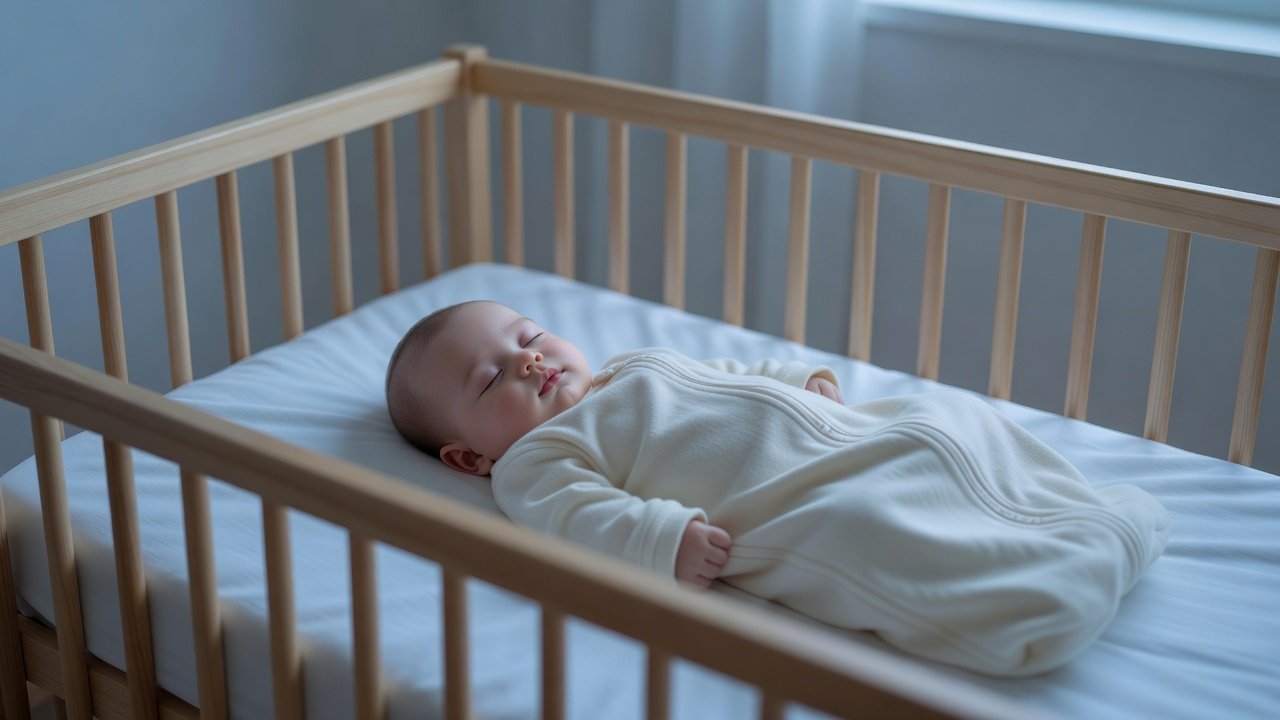
- Keep sleep bare. Take off any costume before a nap, and never use one as sleepwear. Safe sleep rules apply on Halloween night too; see our winter safe sleep guide.
Flames, lights, and cords
Real candles in jack-o’-lanterns are a burn risk near babies and costumes. The AAP suggests battery-operated flameless candles, flashlights, or glow sticks instead. Let older siblings draw faces on pumpkins with markers rather than carving, and keep lit decorations well out of a baby’s reach.
For holiday lights, check cords for damage, keep them out of crawling range, and avoid draping them near the crib. Tree ornaments, glass baubles, tinsel, and small gifts also belong above baby height.
Visitors and germs: setting kind but firm ground rules
Gatherings are one of the best parts of the season. They are also when babies meet the most people with coughs and runny noses. Young infants are more vulnerable to serious illness from common infections, so it is reasonable for parents to set some house rules.
These measures need no special products:
- Hand-washing at the door. Ask everyone to wash with soap and water before holding or touching the baby, and again after diaper changes or coming in from outside.
- Sick people stay home. Anyone with a cough, fever, vomiting, diarrhea, or other contagious illness should postpone the visit. The AAP advises keeping young babies away from people who are sick.
- No kisses on the face or hands. Kisses pass germs. Offer a gentle alternative, like a wave, a tickle on the foot, or a photo.
- Limit the guest list and the time. Fewer people for a shorter stay means fewer exposures. Hold the baby yourself, or use a carrier, if the crowd is large.
- Choose outings carefully. If you attend an event, pick open, less crowded spaces, and keep a quiet room ready for breaks.
- It is okay to say no. Parents are allowed to decline holding requests. “She’s due for a nap” is a polite exit.
Know when to call. A baby under three months with a temperature of 100.4°F (38°C) or higher needs prompt contact with a clinician. See our guide on infant fever and when to worry for what to expect. Call a pediatrician as well if the baby has trouble breathing, feeds poorly, or is unusually drowsy.
A short holiday-season checklist
- Do a hands-and-knees sweep of the floor before each gathering.
- Keep candy, small toys, and balloons out of baby’s reach.
- Pick a plain costume with nothing that can detach, and make sure the car seat harness still fits.
- Use flameless lights in pumpkins and keep cords out of reach.
- Share your visitor rules before guests arrive, so no one is surprised at the door.
- Keep emergency numbers and your pediatrician’s after-hours line handy.
Settle the rules ahead of time, put the soap by the front door, and give the baby what matters most at any party: a parent who knows where everything small has gone.
This article is for general educational purposes and is not medical advice. For emergencies, call 911. For guidance specific to your family, consult a qualified healthcare or child-safety professional.