The first cold week is when many families switch the furnace back on, pull the space heater out of the closet, and light the fireplace without a second thought. It is also when two quiet hazards return: carbon monoxide (CO), which you cannot see or smell, and heaters placed too close to things that burn. Babies are less able to move away from either one.
This checklist walks through the fall tasks that matter most, in an order you can do over a weekend.
Why carbon monoxide is a special concern for babies
Carbon monoxide is a gas produced when fuel burns incompletely. Furnaces, water heaters, gas stoves, fireplaces, portable generators, and vehicles all make it. Normally it vents outside. When a flue is blocked, a heat exchanger cracks, or a fuel-burning device runs in a closed space, it can build up indoors.
The CDC reports that more than 400 Americans die each year from unintentional CO poisoning not related to fires, with over 100,000 emergency department visits annually, and lists infants among the groups at higher risk. The U.S. Consumer Product Safety Commission (CPSC) counts more than 200 deaths a year tied to consumer products specifically, with portable generators the leading source.
Symptoms are easy to mistake for a stomach bug or the flu: headache, dizziness, weakness, nausea, vomiting, sleepiness, and confusion. A baby cannot describe a headache. Fussiness, poor feeding, vomiting, or unusual drowsiness deserve attention, especially if several people in the home feel unwell at once.
Step 1: Alarms first
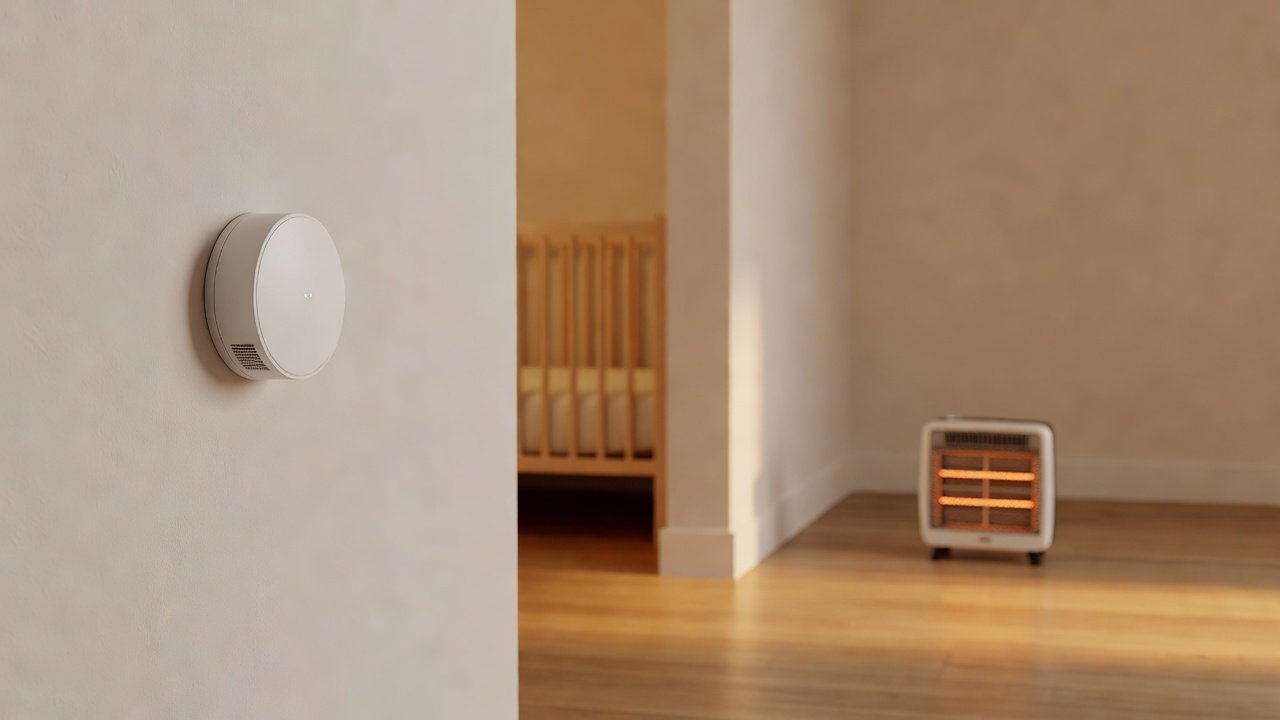
- Install CO alarms on every level of the home and outside sleeping areas, as the CPSC recommends. A hallway outside the nursery is a sensible spot.
- Choose interconnected alarms if possible, so that when one sounds, all of them do.
- Press the test button now, and replace batteries on a schedule you will remember. Some families do it when the clocks change.
- Look for the replacement date on the unit. The CDC notes that detectors generally need replacing about every five years, though models vary, so follow your device’s instructions.
- Check smoke alarms too. They are separate devices from CO alarms unless a combination unit says otherwise.
Step 2: Service the equipment that burns fuel
- Have your furnace or boiler and any gas or oil appliances inspected by a qualified technician before the season starts. The CDC recommends annual servicing of heating systems.
- Have chimneys and flues inspected and cleaned if you use a fireplace or wood stove.
- Check that vents and exhaust pipes are clear of snow, leaves, nests, and clutter.
- Never use a gas oven or stovetop to heat the house.
- Never burn charcoal indoors, including in a garage or tent.
- Run portable generators only outdoors, away from windows, doors, and vents; the CDC advises at least 20 feet. Running one in a garage or with the door open is not safe.
- Do not idle a car in an attached garage, even with the garage door open.
Step 3: Space heaters, placed and used safely
Space heaters are a leading source of home heating fire deaths. According to the National Fire Protection Association (NFPA), space heaters accounted for more than two in five home heating fires and about 81 percent of the associated deaths from 2018 to 2022. More than half of home heating fire deaths came from fires that started when equipment was too close to things that can burn, such as upholstered furniture, clothing, mattresses, or bedding.
Practical rules:
- Keep a three-foot clear zone around the heater in every direction. That means no bedding, curtains, laundry, or toys.
- Never put a heater in or next to a crib, bassinet, or play area, and never point one at a baby’s sleep space.
- Plug directly into a wall outlet. Avoid extension cords and power strips for high-wattage heaters.
- Choose a heater with a tip-over shutoff and an automatic overheat shutoff, and a safety certification mark from a recognized testing laboratory.
- Turn it off when you leave the room or go to sleep. Do not leave one running unattended.
- Use only heaters designed for indoor use, and only the fuel they were built for.
- Check the cord and plug for cracks, fraying, or hot spots, and stop using any heater that has them.
Even a heater with a guard can burn a crawling baby’s skin on contact. Keep babies out of the room while the heater is running, or place a sturdy barrier that a child cannot move.
Step 4: Plan for a power outage
Outages in winter push people toward the riskiest options, such as generators in garages and stoves for warmth. Decide your plan now:
- Where will the family go if the house is too cold, such as a relative’s home or a warming center?
- Do you have battery-powered CO alarms, flashlights, and extra warm clothing in a handy spot?
- Have you charged devices and written down the numbers you may need?
Dress the baby in layers during an outage, and follow the same safe sleep rules: no blankets in the crib. Our guide to safe sleep in winter explains how.
If the alarm sounds, or you suspect CO
The CPSC’s guidance is direct: get outside to fresh air immediately, then call 911. Take the baby and everyone else with you. Do not stop to open windows or hunt for the source. Do not go back in until emergency responders say it is safe. Even if everyone feels fine afterward, ask responders or a clinician whether exposed people should be checked, because symptoms can be subtle in infants.
Treat a low-battery chirp seriously too. Replace the battery or unit right away instead of silencing it.
A weekend checklist
- Test every smoke and CO alarm; replace batteries and any expired units.
- Book the furnace and chimney inspections, if not done in the past year.
- Clear vents and exhaust pipes outside.
- Set up each space heater with a three-foot clear zone, a wall outlet, and a rule that it is off when unattended or when everyone sleeps.
- Keep generators and grills outdoors.
- Write down your outage plan and where you will go.
None of this needs to be done perfectly in one day. The alarms and the three-foot rule do the most work. Start there, then make the rest of the list a yearly habit tied to the first cold snap.
This article is for general educational purposes and is not medical advice. For emergencies, call 911. For guidance specific to your family, consult a qualified healthcare or child-safety professional.