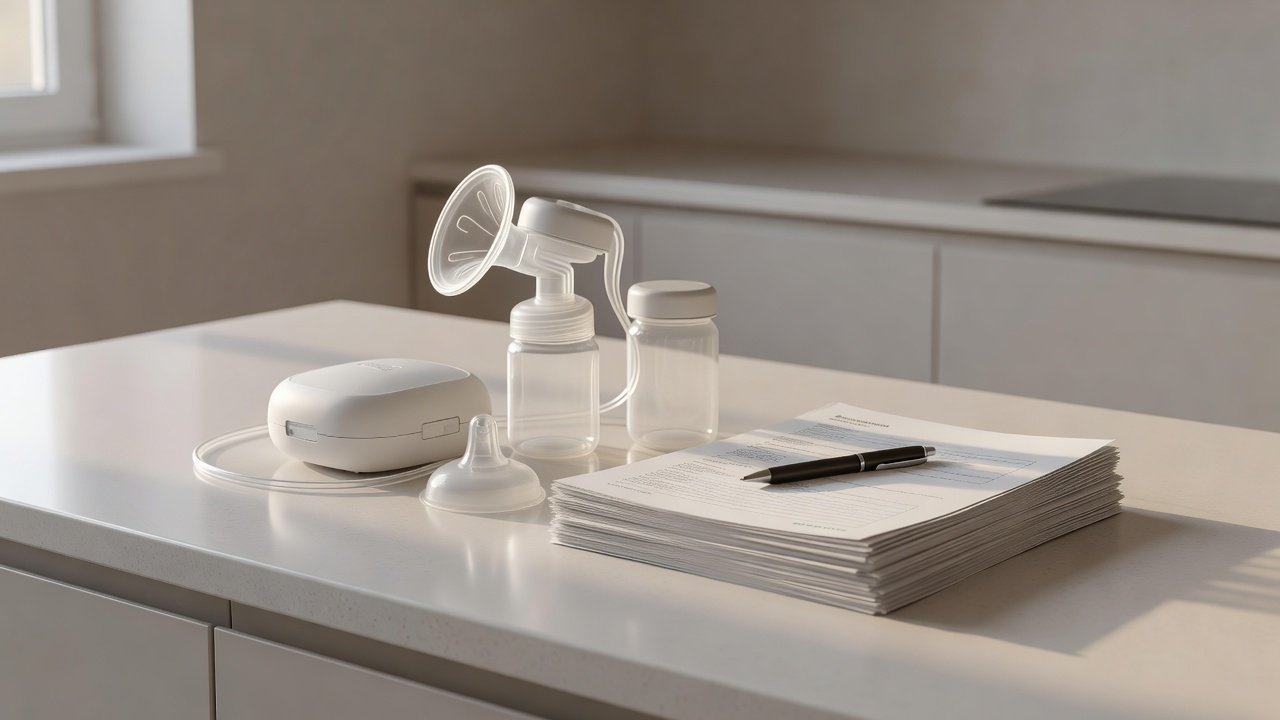
The rule is more generous than most parents realise, and the process is more fragile than the rule. Under the Affordable Care Act, non-grandfathered health plans must cover certain preventive services without cost sharing — no copay, no coinsurance, and no requirement to meet your deductible first. Breastfeeding equipment and supplies are on that list.
Where it goes wrong is almost never the benefit. It is the plumbing: which supplier you order from, when you order, and which billing code the claim goes out under. Knowing those three things in advance prevents most denials, and knowing the underlying guideline language resolves most of the rest.
What the Rule Actually Requires
The specific standard comes from the Women’s Preventive Services Guidelines, maintained for HRSA by the Women’s Preventive Services Initiative. The recommendation covers comprehensive lactation support services — including consultation, counseling, education by clinicians and peer support services, and breastfeeding equipment and supplies — during the antenatal, perinatal, and postpartum periods.
Three details in that guideline are worth having at hand.
Double electric pumps are named explicitly, including pump parts and maintenance, along with breast milk storage supplies and additional equipment as clinically indicated for breastfeeding difficulties.
Access cannot be conditioned on failing a manual pump first. The guideline states that access to double electric pumps “should be a priority to optimize breastfeeding and should not be predicated on prior failure of a manual pump.” This closed a common insurer practice, and it is the single most useful sentence to quote on an appeal.
Coverage spans pregnancy through the postpartum period, not just after delivery — which is why ordering before the birth is normal rather than premature.
These provisions apply for plan years beginning on or after December 30, 2022.
Who Is Not Covered
Two exceptions matter.
Grandfathered plans — plans that have existed largely unchanged since March 23, 2010 — are not required to follow the preventive services rules. These are now rare, but they exist, and “your plan is grandfathered” is sometimes given as a denial reason incorrectly. If you are told this, ask for it in writing and verify it with your HR or benefits administrator, because plans lose grandfathered status when they make certain changes.
Some short-term and non-ACA-compliant plans operate outside these requirements entirely.
Medicaid coverage of pumps varies by state, and many state Medicaid programs and MCOs do cover them, often through their own DME process. If you are on Medicaid, ask your plan directly rather than assuming either way.
How the DME Channel Works
Plans generally do not hand you a pump. They pay a durable medical equipment (DME) supplier that is contracted with them, and the supplier ships it to you.
The practical sequence:
- Get a prescription from your OB-GYN, midwife or pediatrician. Many suppliers will request it directly from your provider if you give them the office details.
- Call the number on the back of your insurance card and ask three specific questions: which in-network DME suppliers can provide a breast pump, how early in pregnancy you may order, and whether the plan covers a double electric pump specifically.
- Order through an in-network supplier. Going out of network is the most common cause of partial coverage or outright denial.
- Confirm what “covered” includes for your plan — the pump itself, replacement parts, tubing and flanges, and storage supplies are separate line items and plans differ on which they include and how often.
A note on flange sizing: the size shipped in the box fits some people and not others, and an incorrect fit causes pain and poor output. Replacement flanges in other sizes are frequently coverable as pump parts. Ask.
Timing
Most plans allow ordering in the third trimester, and a common window is 30 to 60 days before the due date. Some plans will only ship after delivery; some ship earlier but hold delivery until closer to the date.
The reason to start early even if shipping is held: the prescription, the supplier selection and the benefit verification all take time, and none of it is work you want to be doing in the first week postpartum. Ask for the exact window when you make the initial call, and write down who told you and when.
Plans also typically cover one pump per pregnancy. If you had a pump from a previous birth, you are generally entitled to a new one for this one.
When the Claim Is Denied
Denials cluster into a few recognisable causes, and most are administrative rather than substantive.
Coded as DME instead of preventive. This is the big one. If the claim processes under the durable medical equipment benefit, it lands against your deductible and coinsurance instead of being paid in full as preventive care. The fix is a reprocessing request, not an appeal — ask the representative to have the claim reviewed under preventive services under ACA Section 2713, not under DME.
Plan incorrectly flagged as grandfathered. Ask for written confirmation and verify with your benefits administrator.
Out-of-network supplier. If no in-network DME supplier can actually provide the item, say so explicitly and ask what mechanism the plan has for obtaining a required preventive item when the network cannot supply it.
Ordered outside the coverage window. Ask what the window is and whether an exception applies.
Manual pump offered instead of double electric. Quote the guideline: access to double electric pumps should not be predicated on prior failure of a manual pump.
Running the Appeal
Start with a phone call, because a coding error is often fixed in one. Get a reference number for the call and the name of the person you spoke with, and ask when the reprocessed claim should appear.
If that does not resolve it, file a formal internal appeal. Every plan is required to have an appeals process, and yours must tell you the deadline — typically 180 days from the denial notice.
Put it in writing and include:
- The denial notice and claim number
- The prescription from your provider
- A plain statement that breastfeeding equipment and supplies are a covered preventive service under the HRSA-supported Women’s Preventive Services Guidelines and PHS Act Section 2713
- The specific guideline language about double electric pumps not being predicated on prior failure of a manual pump
- Your call log — dates, names, reference numbers
If the internal appeal fails, you have the right to an external review by an independent reviewer, and the plan is bound by the outcome. The denial letter must explain how to request one. Your state insurance department can also help, and for employer-sponsored plans the U.S. Department of Labor’s Employee Benefits Security Administration handles benefit inquiries.
The Habit That Prevents All of This
Keep one folder — physical or digital — with the prescription, the supplier’s name and order confirmation, every explanation of benefits, and a running log of every call with date, name and reference number.
Almost every successful appeal turns on being able to show what you were told and when. Almost every failed one turns on not being able to. The benefit is real and the law is on your side; the paperwork is what determines whether you get it without paying twice.
This article is for general educational purposes and is not medical, legal or insurance advice. Plan rules vary; confirm details with your insurer and your healthcare provider.