There is a specific gap in the American safety net that surprises most families the first time they hit it: the major federal nutrition programs do not pay for diapers.
SNAP covers food. WIC covers a defined list of nutrition items. Neither covers diapers, wipes, or other hygiene supplies, because both are food programs and diapers are not food. Medicaid does not cover them for a typical healthy infant either. A family can be enrolled in every program they qualify for and still have no way to buy diapers.
That gap is what diaper banks exist to fill, and the scale of the need is substantial. Research from the National Diaper Bank Network has found that close to half of U.S. households with children under four report diaper need — not having enough diapers to keep a child clean, dry and healthy.
Why It Compounds
Diaper need is unusually damaging for its size, because it blocks other things.
Most licensed child care programs require parents to supply a day’s worth of diapers. A parent who cannot supply them cannot leave the child in care, and a parent who cannot leave the child in care cannot go to work or class. The shortage that starts as a $25 problem becomes a lost shift, then a lost job, then a deeper shortage.
It is also expensive in a way that penalises the families least able to absorb it. Buying in bulk is substantially cheaper per diaper, but bulk requires cash up front, a car, and somewhere to store it. Families short on all three buy small packs at convenience prices — paying the most per diaper precisely because they have the least.
And stretching a supply has health consequences. Leaving a diaper on longer than it should be, or reusing one, causes dermatitis and increases the risk of urinary tract infections. The pediatric visit that results costs far more than the diapers would have.
What a Diaper Bank Actually Provides
The National Diaper Bank Network connects and supports more than 240 community-based diaper banks, which together distribute free diapers to roughly 320,000 children every month.
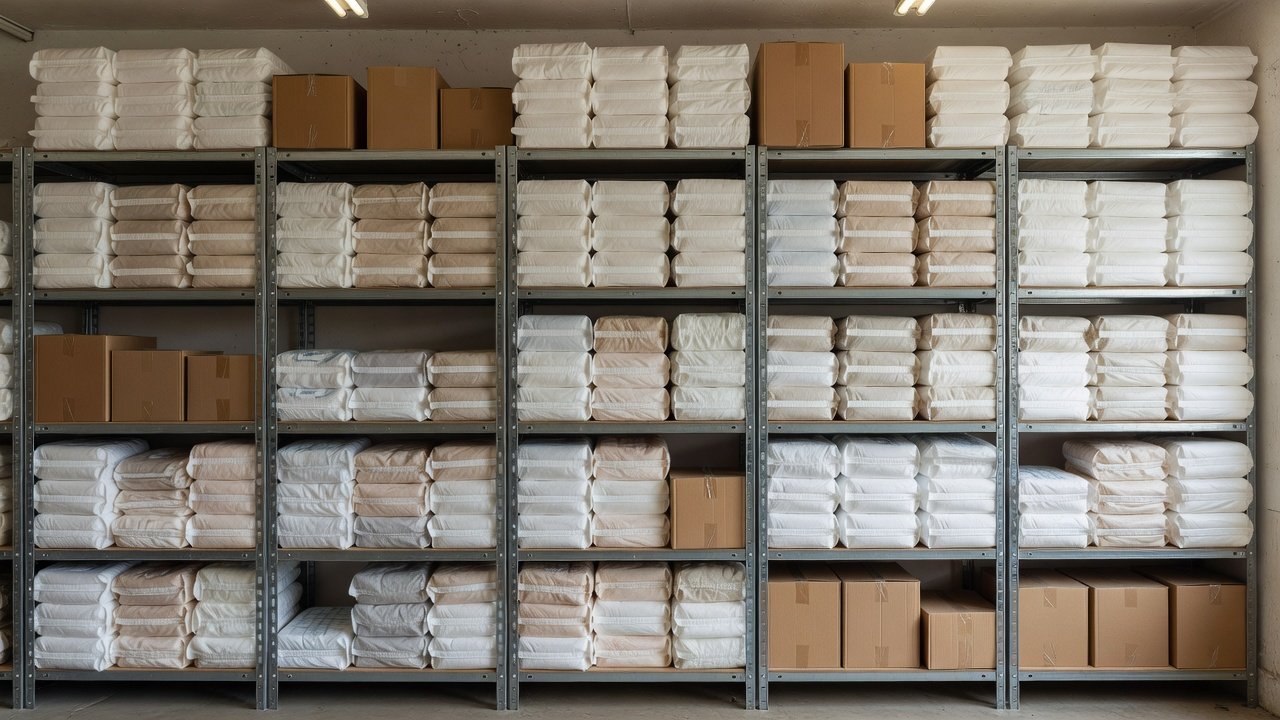
Most diaper banks do not distribute directly to families. They operate like food banks: they collect and warehouse diapers in bulk, then supply partner agencies — food pantries, family resource centers, health clinics, shelters, home-visiting programs, faith organisations — which hand them to families. When you look for help, you are usually looking for the partner agency near you rather than the warehouse.
What to expect, with the caveat that every program sets its own rules:
- Quantity is typically a partial monthly supply rather than a full one — commonly in the range of 25 to 50 diapers per child per distribution. It is meant to close a gap, not replace your whole supply.
- Frequency is often monthly, sometimes more limited.
- Sizes depend on donations. Newborn and larger sizes are frequently short; ask what is in stock before you travel.
- Extras vary. Many programs also carry wipes, and some carry period supplies, formula, or incontinence products for older family members.
- Eligibility is generally light. Many programs ask only for the child’s age and size and some proof you live in the service area. Some ask for nothing at all. Very few require the documentation that federal benefit programs demand.
Cloth diapering programs exist in some areas and are worth asking about, especially if laundry access is not a barrier for you.
Three Ways to Find One
Call 211, or go to 211.org. This is the first thing to try. 211 is a free, confidential referral service staffed around the clock, and specialists can identify local resources for diapers and other basic necessities. It is faster than searching, because the specialist knows which local programs currently have supply.
Search the NDBN member directory. The National Diaper Bank Network maintains a member directory and a get help page listing community diaper programs by area. If a member bank serves your county, it can tell you which partner agency distributes near you.
Ask the places you already go. Food pantries, WIC clinics, pediatric offices, home-visiting nurses, shelters, churches, mosques and synagogues frequently either hold diaper supplies or know exactly who does. Local parent groups and community mutual aid networks often move diapers faster than any formal channel.
If none of those produce a result, widen the geography before giving up. Diaper bank coverage is uneven, and the nearest program may be in an adjacent county.
Making the Call Easier
Two practical notes.
Know your child’s current size and weight before you call. Distribution is by size, and this is the first question you will be asked.
Ask about timing and format. Some programs distribute on fixed days, some require an appointment, some deliver, and some have a partner agency closer to you than the one listed. A two-minute question saves a wasted trip.
And if you are told a program is out of stock, ask when it restocks and whether it can refer you elsewhere. Diaper banks track each other’s supply, and being out this week is not the same as being unable to help.
If You Want to Help
Diaper banks are almost always short on size 4, 5 and 6 — parents donate the newborn packs their baby outgrew, and demand skews larger. Cash goes further than product, because banks buy at wholesale rates individuals cannot access. Opened packs are usually accepted; check first.
The Point
Diaper need is one of the few forms of hardship that is both extremely common and almost entirely invisible, largely because parents assume that needing help buying diapers reflects on them rather than on a benefits system that leaves an obvious item off every list.
The programs exist, the eligibility requirements are unusually light, and 211 will connect you in a single phone call. If you need diapers, the resources are worth the call — and if you have ever been told to just apply for benefits, it is worth knowing the benefits were never going to cover this.
This article is for general educational purposes and is not medical advice. Program availability, quantities and eligibility vary by location and change over time; confirm current details with the program directly.