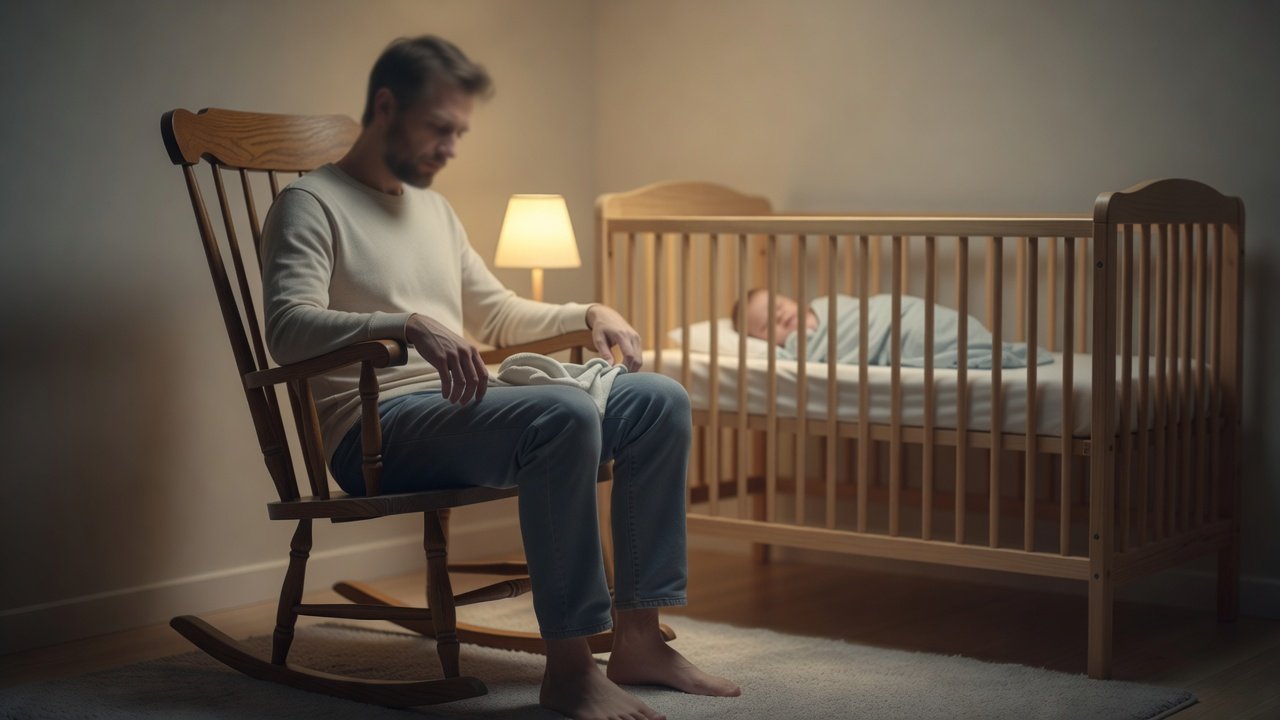
The sixth week after birth is often when the wheels come off. The initial adrenaline has faded, the visitors have gone home, sleep deprivation has accumulated for weeks, and a parent who is struggling emotionally may be questioning whether something is seriously wrong with them. Postpartum depression and postpartum anxiety are the most common complications of childbirth — more common than gestational diabetes, preterm birth, or preeclampsia — and they are also among the most underdiagnosed.
This guide covers what postpartum depression and anxiety actually look like (they don’t always look like crying), how screening tools work, when to seek help, what pediatricians are trained to watch for at well-child visits, and what evidence exists about postpartum depression in fathers and non-birthing parents.
This is educational information, not a diagnostic tool and not a substitute for professional evaluation. If you’re in crisis, contact the 988 Suicide and Crisis Lifeline by calling or texting 988.
What postpartum depression and anxiety are — and what they aren’t
Postpartum depression (PPD) is a clinical depression that occurs after childbirth. It is distinguished from the “baby blues” — the transient tearfulness, mood swings, and emotional volatility that affect up to 80% of new mothers in the first one to two weeks after birth — by its duration, severity, and functional impact.
PPD symptoms persist beyond two weeks, can start any time in the first year after birth (not just the immediate postpartum period), and include:
- Persistent sadness, emptiness, or hopelessness
- Loss of interest in the baby or in activities that previously brought pleasure
- Difficulty bonding with the infant
- Significant sleep disturbance beyond what the infant’s needs would explain
- Changes in appetite
- Difficulty concentrating or making decisions
- Feelings of worthlessness or excessive guilt
- Thoughts of harming oneself or the baby (requires immediate professional evaluation)
Postpartum anxiety may occur alongside PPD or independently. It often presents as intrusive, racing thoughts — particularly about harm coming to the baby — along with physical symptoms such as heart racing, shortness of breath, and an inability to rest even when the opportunity exists. Anxious parents sometimes appear “fine” to observers because anxiety can look like hypervigilance rather than sadness. The repetitive checking, the inability to let the baby out of sight, the constant fear that something terrible is about to happen — these are anxiety symptoms that don’t always register as mental health concerns to family members or even to the parent experiencing them.
A parent can have postpartum anxiety without postpartum depression, and the distinction matters for treatment.
Prevalence: how common is this
Postpartum depression affects approximately 1 in 5 new mothers — estimates in clinical literature range from about 10% to 20% depending on the population studied and the screening thresholds used. The NCQA tracks postpartum depression screening rates nationally as a quality measure, reflecting how central this condition is to maternal and child health outcomes.
Postpartum depression in fathers and non-birthing parents is increasingly documented and systematically underscreened. Research published in peer-reviewed literature suggests paternal postpartum depression affects approximately 1 in 10 new fathers, with risk rising substantially — to an estimated 25-50% — for fathers whose partner has postpartum depression. Because paternal PPD is rarely screened for in routine clinical settings, most cases go unidentified.
The screening tools: EPDS and PHQ-9
Two validated questionnaires are used most commonly in both clinical screening and research settings.
Edinburgh Postnatal Depression Scale (EPDS)
The EPDS is a 10-question self-report tool specifically developed for postpartum screening. It asks about mood, anxiety, self-blame, difficulty sleeping, and whether the respondent has had thoughts of harming themselves, rated on a 0-3 scale over the past week. The maximum score is 30.
A score of 10 or higher is typically used as the threshold for further evaluation, though individual practices may use slightly different cutoffs. The EPDS includes an anxiety subscale — the EPDS-3, which is the first three items — that captures anxiety symptoms independently, allowing a single screening instrument to identify both depression and anxiety.
Research published in the Journal of Psychiatric Research confirmed the EPDS as a valid and reliable instrument for screening fathers as well as mothers, with a sensitivity of approximately 89% and specificity of about 78% at a cutoff of greater than 10. The EPDS is free, widely translated, and typically takes under 5 minutes to complete.
Patient Health Questionnaire (PHQ-9)
The PHQ-9 is a general depression screening tool not specific to the postpartum period. It asks 9 questions based on DSM criteria for depression over the past two weeks. For postpartum use, it’s often administered alongside or as an alternative to the EPDS. The shorter PHQ-2 (the first two questions of the PHQ-9) is sometimes used as an initial screen, with the full PHQ-9 given to those who score positively.
Both tools are free and publicly available. Neither is a diagnostic instrument — a positive screen prompts further clinical evaluation, not an automatic diagnosis.
Why your child’s pediatric visits are a key screening window
The pediatrician sees the mother-baby dyad at the 1-, 2-, 4-, and 6-month well-child visits. In many cases, these are more frequent contact points with the healthcare system than the mother’s own postpartum visits with her OB or midwife. The American Academy of Pediatrics recommends that pediatricians screen mothers for postpartum depression using a standardized tool at the 1-, 2-, 4-, and 6-month infant visits.
The pediatric visit is not just an opportunity — it is, for many families, the primary healthcare contact point in the postpartum period where PPD screening occurs. The pediatrician’s relationship is with the family, and PPD directly affects infant development, attachment, and wellbeing in ways that fall squarely within pediatric care.
In June 2023, the U.S. Preventive Services Task Force (USPSTF) issued updated guidance recommending screening for anxiety in adults — including pregnant and postpartum people — for the first time. This was the first USPSTF recommendation to address anxiety screening in this population, and it represents a broadening of the clinical imperative beyond depression alone.
What pediatricians are watching for
During a well-child visit, a pediatrician paying attention to family mental health is noticing:
- Whether the parent makes eye contact with the infant and responds to the baby’s cues
- The affect and responsiveness of the parent during the visit
- Comments that suggest excessive worry, hopelessness, or detachment
- Responses to screening questionnaires that the practice may administer routinely
If a screening score is above threshold, most pediatric practices have referral pathways to the parent’s OB, midwife, family physician, or a mental health provider. The pediatrician is not the treating clinician for parental depression — but they are often the person who identifies it and initiates a referral.
If you’re at a well-child visit and feel like something is wrong — with your mood, your ability to function, your relationship with your baby — tell the pediatrician directly. Many parents don’t, because they expect the visit to focus on the baby. The pediatrician can help.
When to seek help now
Seek help from a healthcare provider if:
- Symptoms have lasted more than two weeks
- You’re having difficulty caring for your infant
- You’re having thoughts of harming yourself or your baby
- You’re not able to sleep even when the baby allows it
- Anxiety has become overwhelming or intrusive
- You feel disconnected from your baby and this hasn’t improved
For fathers or non-birthing partners: the same criteria apply. Paternal postpartum depression is real, documented, and treatable. It often goes unidentified because fathers are not routinely screened and may not volunteer concerns in a system that frames postpartum mental health as a maternal issue.
Effective treatment exists. Therapy (particularly cognitive-behavioral therapy), medication, peer support groups, and a combination of approaches have documented efficacy for postpartum depression and anxiety. Treatment works — the barrier is identification and access, not the absence of effective options.
Resources and next steps
- 988 Suicide and Crisis Lifeline: Call or text 988 for immediate crisis support.
- Postpartum Support International (PSI): postpartum.net has a helpline (1-800-944-4773), provider directory, and online support communities. PSI also has resources specifically for fathers and non-birthing parents.
- Your child’s pediatrician: At the next well-child visit, mention how you’re feeling when the pediatrician asks how the family is doing. If they don’t ask, bring it up yourself.
- USPSTF guidance: The USPSTF’s 2023 anxiety and depression screening recommendations cover postpartum populations and can be shared with any provider who questions the clinical basis for screening.
Frequently asked questions
Is postpartum depression the same as baby blues?
No. Baby blues — tearfulness, emotional swings, and mood volatility — typically begin a few days after birth and resolve within one to two weeks without treatment. Postpartum depression is more severe, lasts longer, and significantly impairs functioning. It typically requires professional treatment.
Can postpartum depression start months after birth?
Yes. Postpartum depression can begin any time within the first year after birth, not just immediately postpartum. A parent who seems fine at two weeks may develop symptoms at three months or later.
Do fathers get postpartum depression?
Yes. Research estimates paternal postpartum depression affects approximately 1 in 10 new fathers. The risk is higher when the mother has PPD. Fathers are rarely screened for postpartum depression in routine clinical settings, which contributes to underidentification.
I’m scared to tell my doctor I’m struggling — will they take my baby away?
This is one of the most common fears that prevents parents from seeking help, and it reflects a significant misunderstanding of how postpartum depression treatment works. Seeking help for postpartum depression is a sign of good parenting, not a risk to parental rights. Healthcare providers treat postpartum depression — they are not reporting mechanisms for child protective services when a parent discloses depression symptoms. The situations that involve child protection are ones where a child’s safety is at immediate risk, not ones where a parent voluntarily seeks mental health care.
What if I’m breastfeeding and don’t want to take medication?
Medication is not the only treatment for postpartum depression, and many medications are compatible with breastfeeding. A psychiatrist or OB who specializes in perinatal mental health can help evaluate options. Do not avoid seeking treatment because of uncertainty about medication and breastfeeding — therapy alone has documented efficacy, and a perinatal specialist can discuss medication options that are appropriate for nursing parents.