The pediatrician hands you a sheet at the two-week visit. Flat on the back. Firm surface. Nothing else in the crib. No bumpers, no positioners, no inclined sleepers. Your own parents put you to sleep on your stomach with a bumper pad and a stuffed animal the size of a golden retriever, and you survived. So why is this so important now?
Because we now have decades of data on what actually kills infants during sleep, and the picture is clearer than it has ever been. Sleep-related infant deaths — which include sudden infant death syndrome (SIDS), accidental suffocation, and deaths in unknown circumstances — claim roughly 3,400 infants in the United States each year, according to the CDC. The overwhelming majority happen in sleep environments that violate safe sleep guidelines in at least one way. Understanding why each element of the recommendation matters makes it easier to hold the line when family members offer well-meaning alternatives.
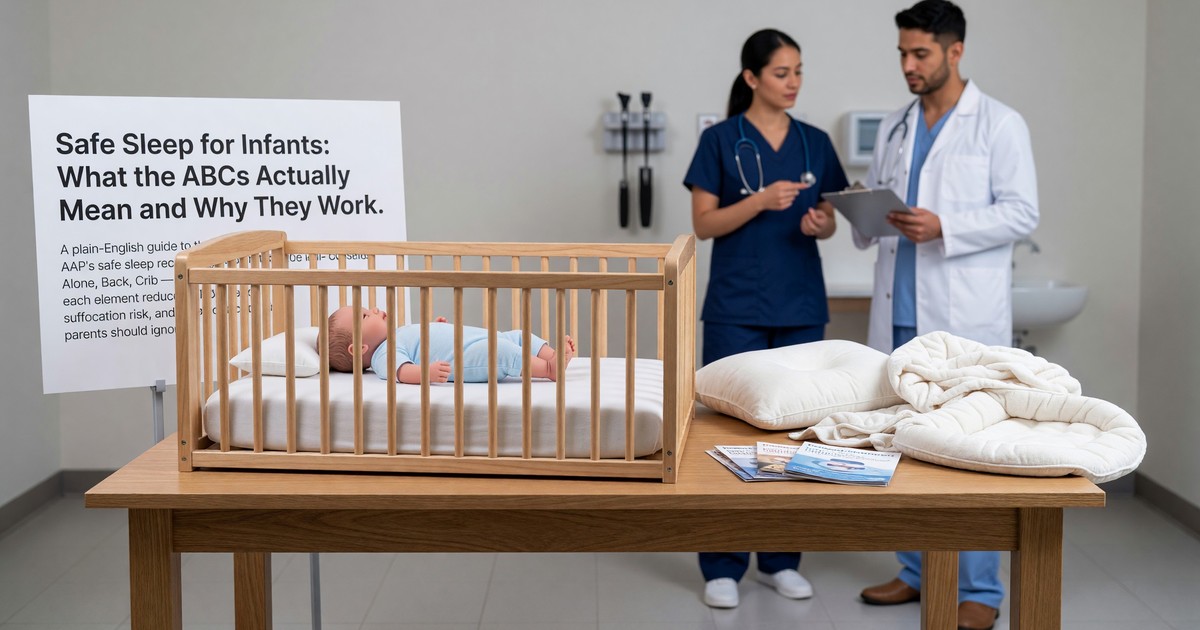
The ABCs: Alone, Back, Crib
The American Academy of Pediatrics has published safe sleep guidelines since 1992, and its most recent comprehensive update was in 2022. The core of those guidelines is three letters: A (alone), B (back), C (crib or approved sleep surface). Each one addresses a different mechanism of risk.
Alone
Bed-sharing — sleeping in the same bed as an infant — is one of the most consistent risk factors for sleep-related death, regardless of whether the parents have consumed alcohol or sedating medications. The risk is highest for young infants (under 4 months), premature infants, and low-birth-weight babies, but it exists across age groups. Soft adult bedding, pillows, and the gap between the mattress and headboard create hazards that a crib does not.
The AAP is explicit that this guidance applies to all adults — not just parents under the influence. An alert, sober adult sharing a sleeping surface with an infant can still roll over, pin, or inadvertently cover an infant with bedding during the night.
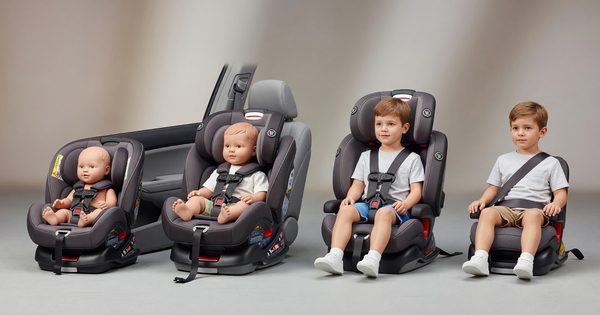
Room-sharing — infant in their own sleep surface in the parents’ room — is explicitly recommended and is associated with reduced SIDS risk. A safe sleep setup in a firm, flat crib pairs with two other first-week safety essentials: correct car seat installation and a home first aid plan. This is the accommodation the AAP recommends for parents who want proximity without the risks of surface-sharing: a bedside bassinet or crib within arm’s reach.
Back
The “Back to Sleep” campaign, launched in 1994, is one of the most successful public health interventions in pediatric history. SIDS rates dropped more than 50 percent in the decade after the campaign began. The mechanism is not fully understood, but the leading hypothesis involves arousal responses — infants who sleep on their backs are more easily aroused from deep sleep by oxygen changes, giving them a better chance of waking when something is wrong.
The back position is for unsupervised sleep. Tummy time — prone positioning while awake and supervised — is important for motor development and should begin in the first weeks of life. The goal is a strong back-sleeping habit for all unsupervised sleep, with plenty of supervised tummy time during waking hours.
If your baby rolls to their stomach independently, you do not need to reposition them every time — the risk decreases substantially once a baby has the motor control to roll both ways. But until they can roll both ways reliably, back placement for every sleep is the standard.
Crib, bassinet, or approved sleep surface
“Crib” is shorthand for any Consumer Product Safety Commission (CPSC)-approved sleep surface. That includes cribs, bassinets, play yards with bassinet attachments, and bedside sleepers — as long as they are designed and sold for infant sleep and meet current CPSC standards. The surface must be firm and flat, with a tight-fitting, firm mattress and no more than two fingers’ width of space between the mattress and the sides of the crib.
What is not an approved sleep surface: a couch, an armchair, an adult bed, a car seat used outside the vehicle, a bouncy seat, a swing, or any inclined sleeper. The CPSC has recalled several inclined sleeper models — including the Fisher-Price Rock ’n Play — after they were linked to infant deaths, because an inclined position puts infants at risk of chin-to-chest airway compromise as their head falls forward. If you have one of these products, stop using it for sleep.
What goes in the crib — and what stays out
A crib used for sleep should contain:
- A firm, flat mattress
- A fitted sheet designed for the mattress
- The baby
That is it. Nothing else.
No bumper pads — mesh or padded. No rolled blankets. No infant positioners or wedges. No stuffed animals or toys. No sleep sacks with any kind of head covering. The CPSC advises against bumper pads of any type because even mesh bumpers have been associated with suffocation and strangulation deaths.
Blankets and loose bedding are an aspiration risk — an infant does not have the motor control or the strength to move bedding away from their face. If the room is cold, dress the baby in a wearable sleep sack (a sleeveless, zipper-front blanket alternative designed for infants) and layer the parents’ clothing instead of adding blankets to the crib.
Pacifiers and safe sleep
The evidence on pacifiers is counterintuitive for many parents: pacifier use during sleep is associated with a reduced risk of SIDS. The mechanism is not established, but the association is consistent across multiple studies. The AAP recommends offering (not forcing) a pacifier at sleep time from birth for formula-fed babies, and after breastfeeding is established for breastfed babies.
If the baby does not want it, do not force it. If the pacifier falls out after the baby is asleep, you do not need to put it back. The protective effect appears to be associated with sleep onset, not continuous pacifier presence overnight.
Products marketed for sleep safety
The safe sleep product market is large, creative, and largely unregulated in its claims. Some specific categories to be skeptical of:
Baby monitors marketed as preventing SIDS. Consumer-grade pulse oximeters and breathing monitors marketed to parents have not been demonstrated to reduce SIDS rates in any clinical trial. The AAP does not recommend them for home use in healthy infants. (This is separate from the medical-grade monitoring sometimes prescribed for infants with specific diagnosed conditions — that is a clinical decision, not a consumer product decision.)
Inclined sleepers and infant loungers. Designed for awake use in many cases, but marketed in ways that suggest sleep use. Check CPSC recall status before purchasing any inclined sleep product. The CPSC recall database is searchable at cpsc.gov.
Weighted sleep sacks. Some products add weight to a sleep sack and market it as reducing infant anxiety or promoting sleep. The AAP and CPSC have expressed concern about these products — they have not been safety-tested for infant sleep and pose an unclear respiratory risk.
When in doubt, check whether a product has CPSC approval as an infant sleep surface or meets ASTM standards for infant sleep products. Marketing language is not the same as safety certification.
Room temperature and sleep environment
There is no precise “correct” room temperature, but the AAP guidance suggests 68–72°F as a general range comfortable for lightly dressed infants. Signs that an infant is too warm include sweating, flushed skin, and rapid breathing. Signs that they are too cold include mottled skin and unusual fussiness. The test is not whether the baby’s hands are cold — infant hands and feet are often cool even when the baby’s core temperature is fine.
Avoid using fans or heaters pointed directly at the crib. If using a fan for white noise or air circulation, point it away from the baby.
Frequently Asked Questions
What is the difference between SIDS and accidental suffocation? SIDS (sudden infant death syndrome) is defined as the sudden, unexplained death of an infant under one year old that remains unexplained after a thorough investigation. Accidental suffocation and strangulation in bed are classified separately — these are deaths with an identified mechanical cause, such as a blanket covering the face or a gap in the sleep surface. Both categories are grouped under “sleep-related infant deaths” in public health data, because many share the same preventable risk factors.
My baby sleeps better in the swing. Is it safe to let them sleep there? No — a swing is not an approved sleep surface for unsupervised sleep. If a baby falls asleep in a swing, move them to a firm, flat surface on their back when it is safe to do so. The inclined, curved surface of a swing can cause a sleeping infant’s head to fall forward, compromising the airway.
We bed-shared before we knew the guidelines. Should I be worried about what happened? The statistics are population-level risk information. Many families who have bed-shared did not experience harm. The recommendation is to minimize risk going forward — it is not an assessment of past choices.
When can my baby safely sleep with a blanket? The AAP recommends keeping loose blankets out of the sleep space for the first year. After 12 months, the risk profile changes significantly. In practical terms: a fitted sleep sack is safer than a blanket for all infant sleep.
Is a Pack ’n Play safe for sleep? Yes — standard Pack ’n Play models (also called play yards) with the bassinet insert or flat play yard surface are CPSC-approved infant sleep surfaces. Use only the mattress pad that comes with the product — adding a separate foam mattress insert is not approved and changes the surface characteristics.
Do I have to do tummy time if my baby hates it? Yes — but you can work up to it gradually. Start with just a minute or two at a time, several times a day. Tummy time on your chest while you are reclined counts. The goal is to build neck and shoulder strength to meet motor milestones; supervised tummy time is safe even when a baby protests it. See the AAP’s tummy time guidance at HealthyChildren.org for a progression guide.
Further Reading from Authoritative Sources
- CDC Safe Sleep for Babies — The CDC’s overview of sleep-related infant death data, prevention recommendations, and links to state-level safe sleep programs.
- AAP Safe Sleep Recommendations — HealthyChildren.org — The American Academy of Pediatrics’ complete 2022 safe sleep guideline summary, written for parents.