The first cold night of the season often brings the same instinct: tuck the baby in tighter. Add a hat, a second pair of pajamas, a quilt from grandma. It feels like care. For a sleeping infant, though, too much warmth is a recognized risk, and the extra blanket is the item safe sleep guidance asks parents to remove, not add.
This guide is about the winter-specific questions, the ones that come up when the heat is turned down and the nights get long. For the full Alone, Back, Crib framework, see our guide to the safe sleep ABCs. Here we focus on how to keep a baby warm enough, but not too warm, without putting anything loose in the sleep space.
The one-extra-layer rule
The American Academy of Pediatrics offers a simple yardstick on HealthyChildren.org: dress your baby in no more than one layer more than you would wear to be comfortable in the same room. If you are fine in a long-sleeved shirt, your baby needs that plus one thin layer, not three.
The reason is that overheating is linked to a higher risk of sudden infant death syndrome (SIDS). A baby who is too warm cannot take off a layer, kick off a blanket, or tell you. Infants also do not regulate their body temperature as well as adults do.
A practical winter setup looks like this:
- A diaper and a snug cotton onesie or undershirt
- Footed pajamas over it
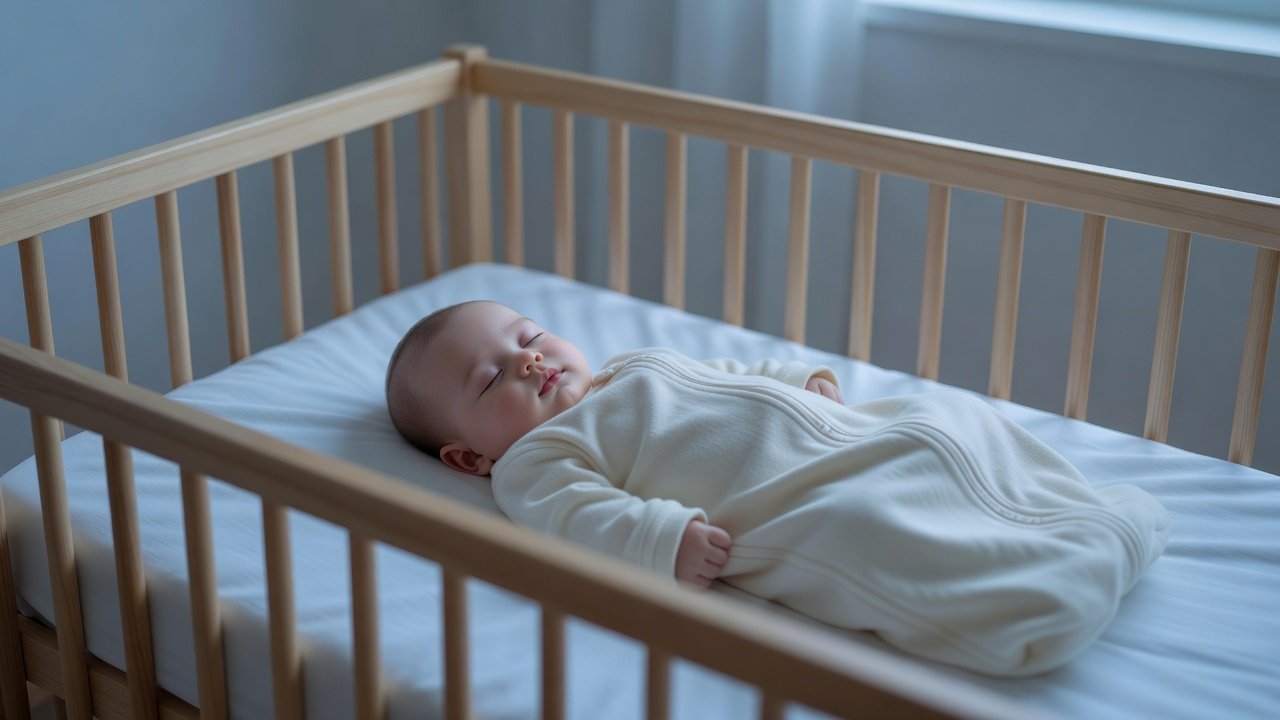
- A wearable blanket (sleep sack) on top, sized to the baby, with armholes and a neckline snug enough that it cannot slide up over the face
On a particularly cold night, swap in a thicker sleep sack or add a long-sleeved layer underneath rather than reaching for a blanket.
Sleep sacks: what to look for
A sleep sack replaces the blanket. It keeps the torso warm, stays where you put it, and leaves nothing to pull over the face. A few points when choosing one:
- Fit matters. The neck and armholes should be snug enough that the baby cannot slip down inside. Buy the size for your baby’s current weight and length.
- Match the warmth to the room. Many sleep sacks carry a TOG number, a unit of thermal insulation. A higher number means a warmer garment. Manufacturers publish room-temperature charts for their own products; treat them as a starting point and still check your baby for comfort.
- No weighted products. The AAP guidance specifically advises against weighted blankets, sleepers, and swaddles for infants.
- Stop swaddling when rolling starts. If you swaddle, keep the baby on their back with the wrap loose around the hips, and stop once the baby shows signs of trying to roll, which often happens around three to four months. At that point a sleep sack with free arms is the safer choice.
Signs your baby is too warm (or too cool)
Do not judge by cold hands and feet. Infants’ hands and feet often feel cool even when the rest of the body is fine. Check the chest or the back of the neck instead.
Signs of overheating include:
- Sweating or damp hair
- A hot chest or belly
- Flushed skin or heat rash
- Fast breathing
If you see these, remove a layer. A baby who feels cool at the chest may need one thin layer added. There is no need to chase a precise thermostat number; the AAP does not set an exact room temperature, and a room that is comfortable for a lightly dressed adult is a reasonable guide.
Hats, heaters, and other winter traps
Hats stay outdoors. A hat is useful on a walk. Indoors and at sleep time, the AAP advises against hats once you are home from the hospital, because they add heat and can slip over the face.
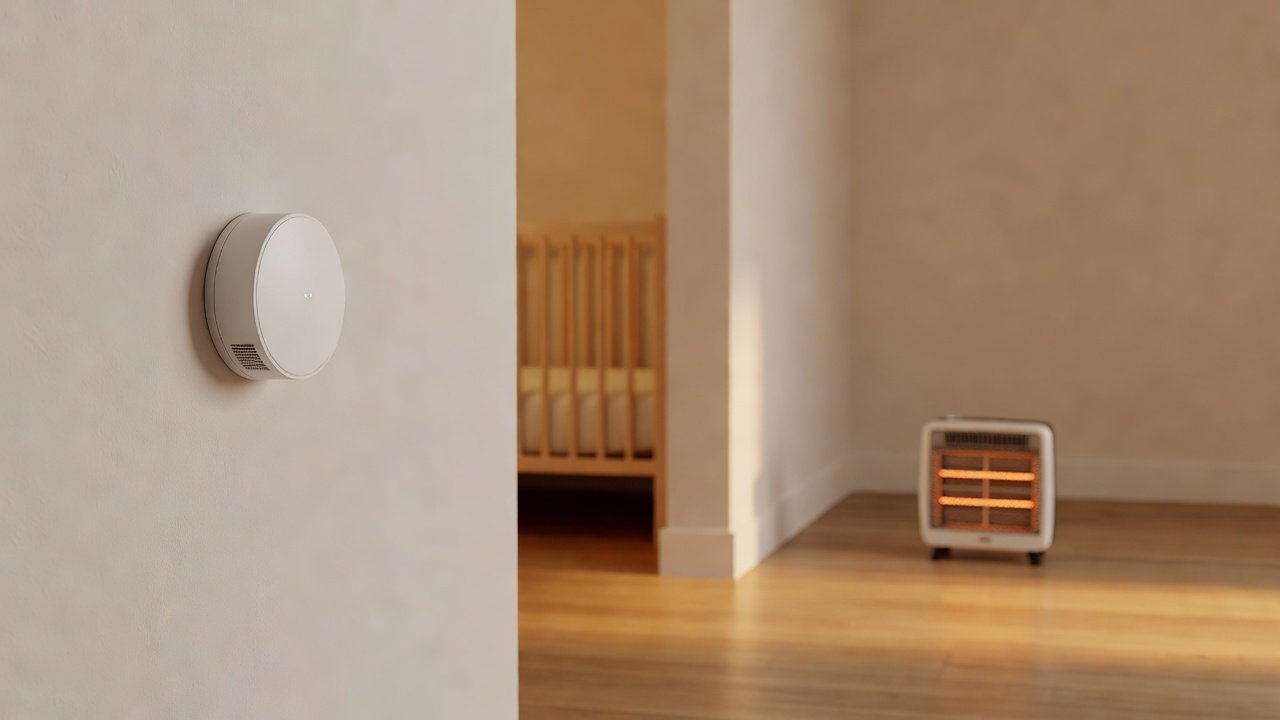
Keep heaters away from the crib. Do not point a space heater at the crib or place the crib against a radiator, heating vent, or a window that gets very cold. Our heating season home safety checklist covers heaters and carbon monoxide in more detail.
Car seats and coats are a separate issue. A baby who falls asleep in a car seat should be moved to a flat, firm sleep surface when you arrive. Bulky coats under harness straps are also a problem in the car; thin layers with a blanket over the buckled harness is the usual advice.
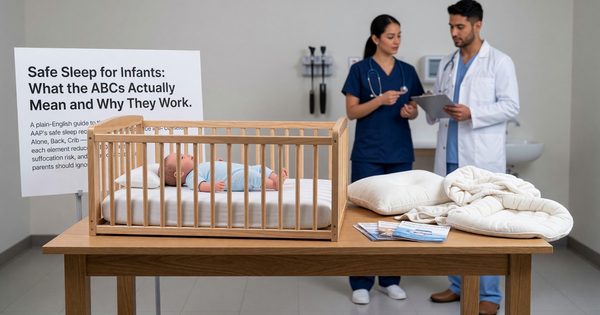
Skip the “just this once” blanket. Blankets, quilts, comforters, pillows, bumpers, and plush toys all stay out of the sleep space for the first year, according to the AAP. A baby cannot reliably move bedding off their face. A sleep sack gives the warmth without that risk.
What a cold-weather sleep space should look like
Picture the crib after you put the baby down:
- Baby on their back
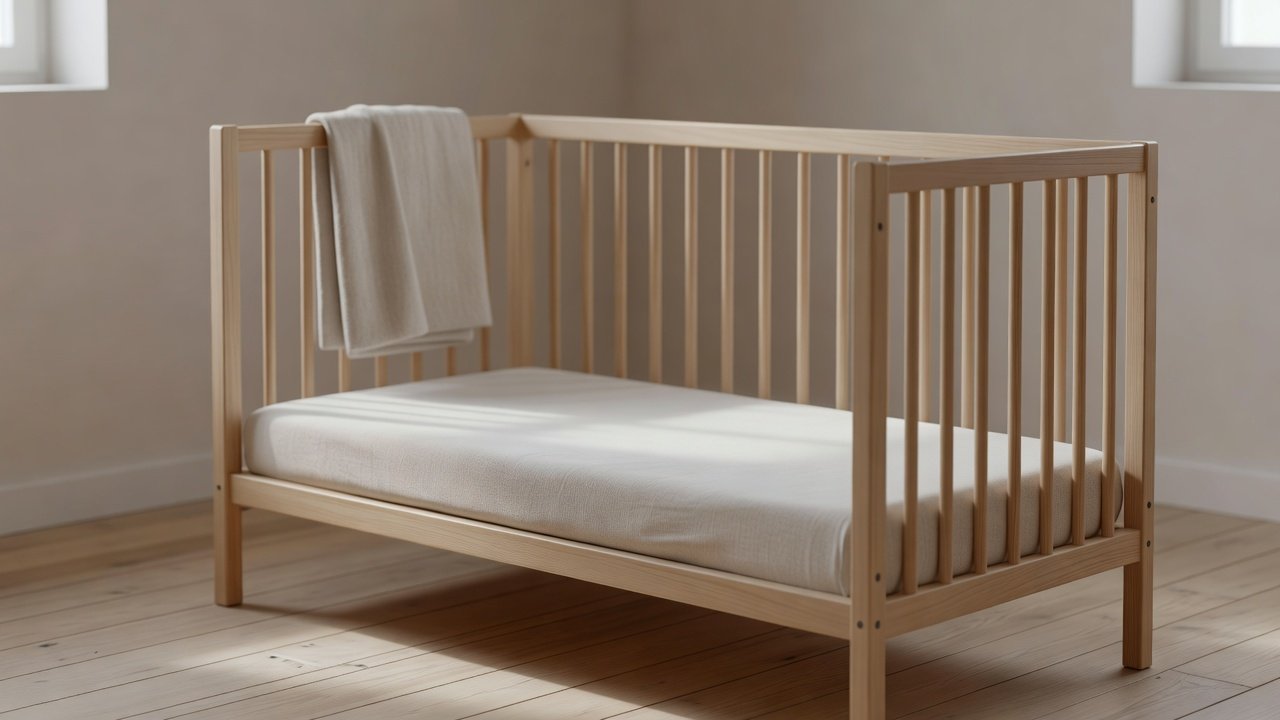
- Firm, flat mattress with a tight-fitting sheet
- Baby wearing the warm layers, including the sleep sack
- Nothing else
That is true in December just as it is in July. If you want the baby warmer, adjust what the baby wears, or the room itself, not what goes into the crib.
When the family pushes back
Relatives who raised children decades ago may remember heavy blankets and hats as routine. It helps to frame it as a change in knowledge rather than a criticism: guidance has been refined as researchers learned more about what contributes to sleep-related deaths. Offering a sleep sack as a gift idea, rather than a debate, often works better than a lecture.
For babies who are premature, have a medical condition, or run cold for a reason, your pediatrician can tailor advice. Call your child’s clinician if your baby seems unusually cold, listless, or hard to wake, or if you are unsure how to dress them for a specific health situation.
Before the temperature drops further, lay out the winter sleep plan: two or three sleep sacks in the right size, footed pajamas, and a clear conversation with anyone who babysits about what stays out of the crib. A baby who is warm enough in a sleep sack, on their back, in a bare crib, has everything they need.
This article is for general educational purposes and is not medical advice. For emergencies, call 911. For guidance specific to your family, consult a qualified healthcare or child-safety professional.